 By Saurav Mehra
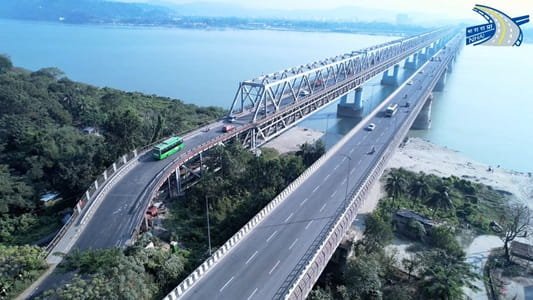
 Saraighat Bridge is one of the most historic and important bridges in Northeast India. Built across the mighty Brahmaputra River in Guwahati, Assam, it was the first rail-cum-road bridge constructed over the Brahmaputra and became a major engineering milestone for the region. The bridge connected Northeast India with the rest of the country and transformed transportation, trade, and communication across Assam.
The bridge is named after the famous Battle of Saraighat fought near the same region, where the Ahom army led by Lachit Borphukan defeated the Mughal forces in 1671.
| Feature | Details |
| Popular Name | Saraighat Bridge |
| Location | Guwahati, Assam |
| State | Assam |
| River | Brahmaputra River |
| Opened In | 1962 |
| Public Opening | 1963 |
| Bridge Type | Rail-cum-road bridge |
| Length | Around 1.3 km |
| Famous For | First bridge over Brahmaputra in Assam |
| Nearby Areas | Pandu, Amingaon, Jalukbari |
| Nearest Railway Station | Kamakhya Junction |
| Nearest Airport | Lokpriya Gopinath Bordoloi International Airport |
| Main Purpose | Rail and road connectivity |
Location of Saraighat Bridge
Saraighat Bridge is located in Guwahati, Assam, connecting the southern bank of the Brahmaputra at Pandu with the northern bank at Amingaon. The bridge lies near important transport routes leading toward North Assam and other northeastern states.
Its strategic location made it one of the most important transportation links in Northeast India.
Directions to Reach Saraighat Bridge
Reaching Saraighat Bridge is easy because the area is connected through roads, railways, and airports.
By Road
Travelers can reach the bridge through:
- NH-27
- Jalukbari Road
- Guwahati city roads
- North Guwahati routes
Buses, taxis, and private vehicles regularly use the bridge corridor.
By Train
Kamakhya Junction and Guwahati Railway Station are the nearest major railway stations connected to the bridge area.
By Air
Lokpriya Gopinath Bordoloi International Airport is the nearest airport connected through city road routes.
History of Saraighat Bridge
The idea of building a bridge across the Brahmaputra River was first proposed in 1910. However, the project gained serious momentum during and after the Second World War.
After India’s independence, the government decided to build the bridge to improve connectivity between Assam and the rest of India. Construction officially started in 1958–59 under the Northeast Frontier Railway.
The bridge was completed in September 1962, and the first railway engine crossed it on 23 September 1962. Road traffic officially opened in 1963, inaugurated by India’s first Prime Minister Jawaharlal Nehru.
At that time, the bridge cost around ₹10.6 crore to construct.
Structure and Design of Saraighat Bridge
Saraighat Bridge is a double-decker rail-cum-road bridge built using steel truss engineering.
Important features include:
- Double-decker structure
- Railway track on lower deck
- Roadway on upper deck
- Steel truss spans
- Concrete piers
The bridge is around 1,298 meters long and was built approximately 40 feet above normal flood level to allow river navigation below.
According to reports, around:
- 14,000 tonnes of steel
- 40,000 tonnes of cement
- Massive earthwork and concrete foundations
were used during construction.
Importance of Saraighat Bridge
Saraighat Bridge played a major role in Northeast India’s development.
The bridge helped:
- Connect Northeast India with mainland India
- Improve railway transportation
- Increase trade and commerce
- Improve military movement
- Reduce travel difficulties
Before the bridge existed, transportation across the Brahmaputra mainly depended on ferries and steamers.
The bridge became a lifeline for Assam and the northeastern states.
Nearby Areas Around Saraighat Bridge
Pandu
Pandu is located on the southern bank of the Brahmaputra near the bridge. It is known for transport and river port facilities.
Amingaon
Amingaon lies on the northern side of the bridge and serves as an important gateway toward North Assam.
Jalukbari
Jalukbari is one of Guwahati’s important transport junction areas located near the bridge corridor.
North Guwahati
North Guwahati is known for educational institutions, temples, and scenic Brahmaputra views.
New Saraighat Bridge
A second road-only bridge called the New Saraighat Bridge was constructed beside the old bridge and inaugurated in 2017.
Important features include:
- Three-lane roadway
- Concrete beam bridge design
- Improved traffic capacity
- Reduced congestion on old bridge
The new bridge is approximately 1.49 km long.
Proposed Second Rail-Cum-Road Bridge
Because of increasing traffic and railway demand, authorities approved a second rail-cum-road bridge project near Saraighat. Recent reports mention that the project is expected to improve transportation capacity significantly by 2029.
The proposed bridge will include:
- Double railway tracks
- Three-lane roadway
- Footpaths
- Modern steel composite design
Traffic Situation at Saraighat Bridge
Saraighat Bridge experiences heavy traffic congestion because it serves as one of Assam’s most important transport corridors.
Traffic usually increases during:
- Office hours
- Festival seasons
- Tourist travel periods
- Highway movement
Recent reports mentioned long traffic jams after vehicle breakdowns on the old bridge because of narrow passages and heavy traffic pressure.
Scenic Beauty and Tourism
Saraighat Bridge is also famous for:
- Brahmaputra River views
- Sunset scenery
- Monsoon landscapes
- Train photography
- Guwahati skyline views
The bridge looks especially beautiful during evening hours when the Brahmaputra reflects the city lights.
Battle of Saraighat Connection
The bridge area is historically linked to the famous Battle of Saraighat fought in 1671 between the Ahom Kingdom and Mughal Empire.
The Ahom forces under Lachit Borphukan successfully defended Assam against Mughal expansion near this region, making Saraighat an important historical symbol in Assam.
Interesting Facts About Saraighat Bridge
- It was the first bridge over the Brahmaputra River in Assam.
- The bridge officially opened in 1962.
- It is a rail-cum-road double-decker bridge.
- The bridge connected Northeast India with mainland India.
- A second modern Saraighat Bridge opened in 2017.
Conclusion
Saraighat Bridge is one of the most important engineering and historical landmarks in Assam. Built across the Brahmaputra River in Guwahati, the bridge transformed transportation and connectivity in Northeast India.
Its historical importance, engineering legacy, and role in regional development continue to make Saraighat Bridge one of the most iconic bridges in India.
FAQs About Saraighat Bridge
Q1. Where is Saraighat Bridge located?
Saraighat Bridge is located in Guwahati, Assam across the Brahmaputra River.
Q2. Why is Saraighat Bridge famous?
It is famous for being the first rail-cum-road bridge over the Brahmaputra River in Assam.
Q3. Which river flows below Saraighat Bridge?
The Brahmaputra River flows below the bridge.
Q4. When was Saraighat Bridge built?
Construction was completed in 1962 and public road traffic started in 1963.
Q5. What is the length of Saraighat Bridge?
The bridge is around 1.3 km long.
Q6. Why is the bridge historically important?
The bridge area is associated with the famous Battle of Saraighat fought in 1671.
Q7. What type of bridge is Saraighat Bridge?
It is a double-decker rail-cum-road bridge.
Q8. Is there another bridge near Saraighat Bridge?
Yes, the New Saraighat Bridge opened in 2017 beside the old bridge.
Q9. Which railway station is nearest to Saraighat Bridge?
Kamakhya Junction is one of the nearest railway stations.
Q10. Why is Saraighat Bridge important for Northeast India?
The bridge improved transportation, railway connectivity, trade, and communication between Northeast India and the rest of the country.