 By Akash Sharma
 Kathipara Bridge, officially known as the Kathipara Grade Separator, is one of Chennai’s most iconic infrastructure landmarks and one of the largest cloverleaf flyovers in Asia. Located at the busy Kathipara Junction in Chennai, the bridge connects several major highways and urban roads, making it one of the city’s most important transportation hubs.
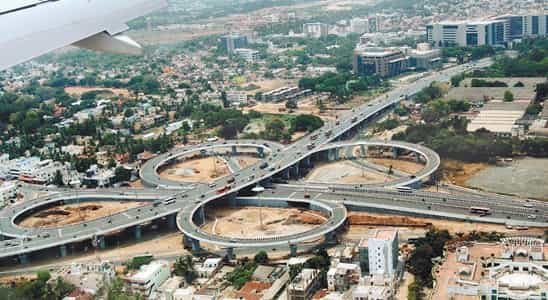
The bridge is famous for its massive cloverleaf design, multi-level ramps, and ability to handle extremely heavy traffic movement daily. Since its opening in 2008, Kathipara Bridge has become a major symbol of Chennai’s urban modernization and transport development.
Quick Overview of Kathipara Bridge
| Feature | Details |
| Popular Name | Kathipara Bridge |
| Official Name | Kathipara Grade Separator |
| Location | Alandur, Chennai |
| State | Tamil Nadu |
| Opened In | 2008 |
| Bridge Type | Cloverleaf grade separator |
| Famous For | Largest cloverleaf flyover in South Asia |
| Nearby Areas | Guindy, Alandur, St. Thomas Mount |
| Nearest Railway Station | St. Thomas Mount Railway Station |
| Nearest Metro Station | Alandur Metro Station |
| Nearest Airport | Chennai International Airport |
| Main Roads Connected | GST Road, Anna Salai, Inner Ring Road |
| Main Purpose | Traffic decongestion |
Location of Kathipara Bridge
Kathipara Bridge is located at Kathipara Junction in the Alandur area of Chennai near Guindy and St. Thomas Mount. The bridge lies at the intersection of four major roads:
- Grand Southern Trunk (GST) Road
- Anna Salai
- Inner Ring Road
- Mount–Poonamallee Road
This strategic location makes it one of Chennai’s busiest road interchanges.
The bridge also provides important connectivity toward Chennai Airport and southern Tamil Nadu routes.
Directions to Reach Kathipara Bridge
Reaching Kathipara Bridge is easy because the area has excellent road, metro, railway, and airport connectivity.
By Road
Travelers can reach the bridge through:
- GST Road
- Anna Salai
- Inner Ring Road
- Mount–Poonamallee Road
MTC buses, taxis, auto-rickshaws, and private vehicles regularly use the flyover corridor.
By Metro
Alandur Metro Station and St. Thomas Mount Metro Station are the nearest metro stations connected through Chennai Metro lines.
By Train
St. Thomas Mount Railway Station and Guindy Railway Station are nearby suburban railway stations.
By Air
Chennai International Airport is located only a few kilometers away from Kathipara Junction.
History of Kathipara Bridge
Before the flyover was built, Kathipara Junction was a major traffic roundabout with severe congestion problems. The junction originally contained a statue of Jawaharlal Nehru and handled massive vehicle movement from multiple highways entering Chennai.
To solve traffic congestion, the National Highways Authority of India (NHAI) launched the Kathipara Grade Separator project under the National Highways Development Programme (NHDP). Construction began during the mid-2000s.
The main flyover span opened in April 2008, while the complete project officially opened to the public on 26 October 2008.
The project reportedly cost around ₹486–500 crore.
Structure and Design of Kathipara Bridge
Kathipara Bridge is designed as a massive cloverleaf grade separator with multiple loops and ramps.
Important features include:
- Cloverleaf interchange design
- Multi-level roadway system
- Eight ramps
- Three-level traffic movement
- Large circular loops
The bridge is considered:
- The largest cloverleaf flyover in South Asia
- One of India’s biggest grade separators
The design allows vehicles to move smoothly between multiple highways without stopping at traffic signals.
Importance of Kathipara Bridge
Kathipara Bridge plays a major role in Chennai’s transportation network.
The bridge helps connect:
- Chennai Airport
- Guindy
- Tambaram
- Central Chennai
- Poonamallee routes
- Southern Tamil Nadu highways
More than two lakh vehicles reportedly use the bridge daily.
The flyover significantly reduced travel delays and traffic congestion at one of Chennai’s busiest intersections.
Nearby Areas Around Kathipara Bridge
Guindy
Guindy is one of Chennai’s major commercial and industrial areas known for IT parks, educational institutions, and transport connectivity.
Alandur
Alandur is an important residential and transport hub connected through metro and suburban railway networks.
St. Thomas Mount
St. Thomas Mount is a historic area famous for churches, railway connectivity, and airport access.
Meenambakkam
Meenambakkam is known for Chennai International Airport and nearby commercial developments.
Kathipara Urban Square
One of the major developments beneath the bridge is Kathipara Urban Square, an urban public space project developed under the flyover loops.
The project includes:
- Bus terminal facilities
- Food courts
- Open-air spaces
- Retail shops
- Parking facilities
- Landscaping zones
The development transformed unused flyover spaces into a modern public utility zone.
Traffic Situation at Kathipara Bridge
Kathipara Bridge experiences extremely heavy traffic because it connects several national highways and airport routes.
Traffic generally increases during:
- Office hours
- Airport travel periods
- Festival seasons
- Weekend traffic movement
Despite congestion during peak hours, the flyover greatly improved traffic flow compared to the old roundabout system.
Chennai Metro Developments Near Kathipara
Kathipara Junction is also becoming important for Chennai Metro Phase II projects.
Recent reports mention the construction of a major elevated metro curve above Kathipara Junction as part of Corridor 5.
The metro structure includes:
- A 413-meter elevated curve
- Balanced cantilever engineering
- Panoramic city views
- Advanced elevated rail design
These developments are expected to further improve transportation connectivity in Chennai.
Scenic and Architectural Importance
Kathipara Bridge is often considered one of Chennai’s most visually impressive modern structures because of:
- Giant looping ramps
- Symmetrical cloverleaf design
- Night lighting
- Aerial photography views
The flyover is especially popular in aerial photos and drone videos of Chennai.
Interesting Facts About Kathipara Bridge
- It is one of the largest cloverleaf flyovers in Asia.
- The bridge officially opened in 2008.
- It connects four major roads in Chennai.
- More than 2 lakh vehicles reportedly use it daily.
- Kathipara Urban Square was later developed beneath the flyover loops.
Conclusion
Kathipara Bridge is one of Chennai’s most important transportation landmarks and a major achievement in Indian urban infrastructure. Built as a giant cloverleaf interchange, the bridge transformed traffic movement at one of the city’s busiest junctions.
Its engineering scale, strategic importance, and role in Chennai’s road network continue to make Kathipara Bridge one of South India’s most iconic flyovers.
FAQs About Kathipara Bridge
Q1. Where is Kathipara Bridge located?
Kathipara Bridge is located at Kathipara Junction in Alandur, Chennai.
Q2. Why is Kathipara Bridge famous?
The bridge is famous for being one of the largest cloverleaf flyovers in South Asia.
Q3. When was Kathipara Bridge opened?
The complete flyover opened to the public in October 2008.
Q4. Which roads connect at Kathipara Bridge?
GST Road, Anna Salai, Inner Ring Road, and Mount–Poonamallee Road connect at the junction.
Q5. Who built Kathipara Bridge?
The project was developed by the National Highways Authority of India (NHAI).
Q6. Why was Kathipara Bridge constructed?
The bridge was built to reduce severe traffic congestion at Kathipara Junction.
Q7. Which metro station is nearest to Kathipara Bridge?
Alandur Metro Station is one of the nearest metro stations.
Q8. Which railway station is nearest to Kathipara Bridge?
St. Thomas Mount Railway Station is the nearest railway station.
Q9. What is Kathipara Urban Square?
It is a public development project beneath the flyover that includes shops, food courts, and bus facilities.
Q10. How many vehicles use Kathipara Bridge daily?
Reports state that more than 2 lakh vehicles use the bridge every day.
 Saurav Mehra