 By Akash Sharma
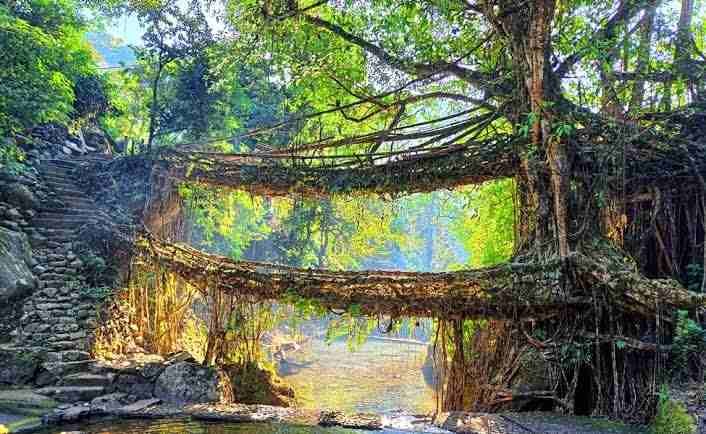
 The Double Decker Living Root Bridge is one of the most unique natural attractions in India. Located in the village of Nongriat in Meghalaya, this extraordinary bridge is made entirely from the living roots of rubber fig trees. Unlike ordinary bridges built with steel or concrete, the roots are carefully guided and shaped over decades by the Khasi tribes to create a strong natural bridge.
The bridge is famous for its rare two-level structure, where one living root bridge stands above another. Surrounded by dense forests, waterfalls, and rivers, the Double Decker Living Root Bridge has become one of Meghalaya’s biggest tourist attractions and trekking destinations.
Quick Overview of Double Decker Living Root Bridge
| Feature | Details |
| Official Name | Umshiang Double Decker Root Bridge |
| Popular Name | Double Decker Living Root Bridge |
| Location | Nongriat Village, Meghalaya |
| State | Meghalaya |
| District | East Khasi Hills |
| Famous For | Living root architecture and trekking |
| Built By | Khasi tribes |
| Material | Living roots of rubber fig trees |
| Estimated Age | Around 100–200 years |
| Nearby Town | Cherrapunji (Sohra) |
| Trek Starting Point | Tyrna Village |
| Special Feature | Two-level living root bridge |
Location of Double Decker Living Root Bridge
The Double Decker Living Root Bridge is located in Nongriat village in the East Khasi Hills district of Meghalaya. The bridge lies deep inside forested valleys near Cherrapunji (Sohra), one of the wettest places on Earth.
The bridge stretches across the Umshiang River and is surrounded by waterfalls, hills, bamboo forests, and crystal-clear streams.
History of the Double Decker Living Root Bridge
The living root bridges of Meghalaya were developed by the Khasi and Jaintia tribes many generations ago. Instead of cutting trees, local communities learned how to guide the aerial roots of rubber fig trees across rivers using bamboo and wooden support structures. Over time, the roots naturally grew stronger and formed stable bridges.
The Double Decker Root Bridge is believed to be over 100 years old, while some estimates suggest parts of the structure may be nearly 200 years old.
The second level was reportedly developed because rising river water sometimes submerged the lower bridge during heavy rainfall seasons.
How to Reach Double Decker Living Root Bridge
By Road
Travelers first reach Cherrapunji (Sohra) from Shillong by road. Shillong is around 54–60 km away from Cherrapunji.
From Cherrapunji, visitors travel to Tyrna village, which is the main trekking starting point.
By Train
The nearest major railway station is Guwahati Railway Station. From there, travelers continue by road toward Shillong and Cherrapunji.
By Air
Shillong Airport and Guwahati Airport are the nearest airports.
Trek to the Double Decker Living Root Bridge
The trek to the bridge is one of Meghalaya’s most famous adventure experiences.
Important trek details:
- Trek starts from Tyrna village
- Around 3,000–3,500 steep steps one way
- Moderate to difficult trekking level
- Dense forest and river crossings
- Suspension bridges along the route
Most trekkers take around:
- 2–3 hours downhill
- 3–4 hours uphill return
The route passes through villages, waterfalls, hanging bridges, and natural pools.
Architecture and Construction
The bridge is created from the aerial roots of the Ficus elastica tree, also called the Indian rubber tree. Khasi tribes carefully direct young roots using bamboo frames until they grow and intertwine into strong pathways.
Unlike normal bridges, the living root bridge becomes stronger with age because the roots continue growing naturally.
Important features include:
- Natural root flooring
- Two-level bridge system
- Long lifespan
- Eco-friendly construction
- Strong resistance to floods and rainfall
Some living root bridges in Meghalaya can last for more than 500 years.
Importance of the Double Decker Living Root Bridge
The bridge represents:
- Sustainable engineering
- Indigenous tribal knowledge
- Eco-friendly architecture
- Cultural heritage of Meghalaya
It is also considered one of the finest examples of bioengineering in the world.
Nearby Attractions Around the Bridge
Rainbow Falls
Rainbow Falls is a beautiful waterfall located beyond Nongriat village and is a popular extension trek.
Cherrapunji
Cherrapunji is famous for heavy rainfall, caves, waterfalls, and scenic valleys.
Single Living Root Bridges
Several single root bridges can also be seen during the trek route.
Natural Pools
Clear blue-green pools near the bridge are popular for photography and relaxation.
Best Time to Visit
The best time to visit the Double Decker Living Root Bridge is between:
- October to May
Monsoon trekking can become slippery and difficult because of heavy rainfall.
Interesting Facts About Double Decker Living Root Bridge
- It is one of the world’s most famous living root bridges.
- The bridge is made entirely from living tree roots.
- It takes decades to create a root bridge.
- The bridge becomes stronger as it ages.
- Meghalaya has several living root bridges, but this is the most famous double-level structure.
Conclusion
The Double Decker Living Root Bridge of Meghalaya is one of India’s most extraordinary natural and engineering wonders. Hidden deep inside the forests of Nongriat village, the bridge reflects the wisdom, patience, and creativity of the Khasi tribes.
Its unique living architecture, scenic trekking route, and cultural importance continue to attract travelers, trekkers, photographers, and nature lovers from around the world.
FAQs About Double Decker Living Root Bridge
Q1. Where is the Double Decker Living Root Bridge located?
The bridge is located in Nongriat village in the East Khasi Hills district of Meghalaya.
Q2. Why is the Double Decker Living Root Bridge famous?
It is famous because it is made entirely from living tree roots and has a rare two-level structure.
Q3. Which tribe built the living root bridges?
The Khasi tribes of Meghalaya developed the living root bridges.
Q4. How old is the Double Decker Living Root Bridge?
The bridge is estimated to be around 100–200 years old.
Q5. How many steps are there in the trek?
The trek involves around 3,000–3,500 steep steps one way.
Q6. What is the best time to visit the bridge?
The best time to visit is from October to May.
Q7. Which tree is used to make the bridge?
The bridge is made using the roots of the rubber fig tree (Ficus elastica).
Q8. Can beginners do the trek?
Yes, beginners can do the trek, but good stamina is helpful because of the steep stairs.
Q9. Are guides required for the trek?
Local authorities may require visitors to take guides for the trek.
Q10. Is the Double Decker Living Root Bridge natural or man-made?
It is a combination of both nature and human guidance, as living roots are trained and shaped by local tribes over many years.
 Saurav Mehra