 By Akash Sharma
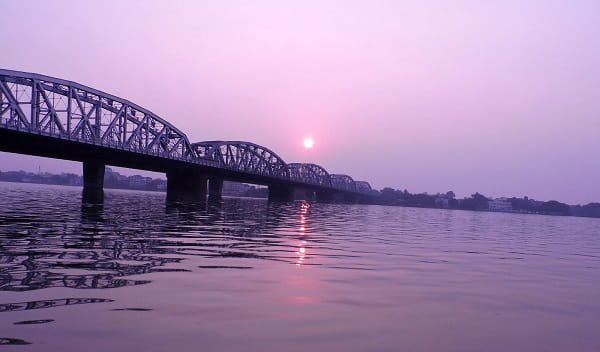
 Bally Bridge, officially known as Vivekananda Setu, is one of the oldest and most important bridges in West Bengal. Built across the Hooghly River, the bridge connects Bally in Howrah district with Dakshineswar in Kolkata. It serves as both a road and railway bridge and has played a major role in Kolkata’s transportation network for decades.
Originally called Willingdon Bridge during British rule, the structure was later renamed Vivekananda Setu. Even today, many locals still popularly call it Bally Bridge. The bridge is famous for its historic steel structure, river views, and proximity to the Dakshineswar Kali Temple.
| Feature | Details |
| Official Name | Vivekananda Setu |
| Popular Name | Bally Bridge |
| Location | Bally–Dakshineswar, West Bengal |
| State | West Bengal |
| River | Hooghly River |
| Opened In | 1931 |
| Bridge Type | Rail-cum-road truss bridge |
| Famous For | Historic Kolkata connectivity |
| Nearby Areas | Bally, Dakshineswar, Belur, Uttarpara |
| Nearest Railway Station | Bally Railway Station |
| Nearest Airport | Netaji Subhas Chandra Bose International Airport |
| Main Purpose | Road and railway connectivity |
Location of Bally Bridge
Bally Bridge is located over the Hooghly River between Bally in Howrah district and Dakshineswar in Kolkata. The bridge forms an important northern connection route between Kolkata and Howrah regions.
Its location near Dakshineswar Kali Temple and Belur Math makes it an important route for pilgrims and tourists.
Directions to Reach Bally Bridge
Reaching Bally Bridge is easy because it is connected through roads, railways, metro routes, and local transport services.
By Road
Travelers can reach the bridge through Barrackpore Trunk Road, Grand Trunk Road, or Dakshineswar routes using taxis, buses, and private vehicles.
By Train
Bally Railway Station is the nearest railway station. Dakshineswar Railway Station is also located nearby.
By Metro
Dakshineswar Metro Station provides easy metro connectivity to the bridge area.
By Air
Netaji Subhas Chandra Bose International Airport is the nearest airport connected through city roads and taxis.
History of Bally Bridge
The construction of Bally Bridge started in 1926 during British rule and was completed in 1931. The bridge was originally named Willingdon Bridge after the Viceroy of India, Freeman Freeman-Thomas, Marquess of Willingdon.
The bridge was later renamed Vivekananda Setu in honor of Swami Vivekananda.
The bridge was built mainly to improve road and railway communication between Kolkata and Howrah, which earlier depended heavily on river transport.
Structure and Design of Bally Bridge
Bally Bridge is a multi-span steel truss bridge carrying both railway tracks and road traffic.
Important features include:
- Steel truss structure
- Rail-cum-road bridge design
- Nine spans
- Length of around 2,887 feet
- Hooghly River crossing
At the time of construction, it was considered one of India’s major engineering achievements.
Importance of Bally Bridge
Bally Bridge plays a major role in Kolkata’s transportation system.
The bridge helps connect:
- Kolkata
- Howrah
- Dakshineswar
- Bally
- Belur
- Northern suburban areas
Thousands of commuters use the bridge daily for office travel, railway movement, and local transportation.
Nearby Areas Around Bally Bridge
Bally
Bally is a residential and suburban locality in Howrah district located directly beside the bridge.
Dakshineswar
Dakshineswar is famous for the Dakshineswar Kali Temple.
Belur
Belur is known for Belur Math, the headquarters of the Ramakrishna Mission.
Uttarpara
Uttarpara is a nearby town known for residential neighborhoods and educational institutions.
Traffic Situation at Bally Bridge
Bally Bridge experiences heavy traffic congestion because it handles both railway and road transport.
Traffic generally increases during:
- Office hours
- Festival seasons
- Temple visit timings
- Weekend travel
Because of the ageing structure and increasing traffic load, a parallel bridge called Nivedita Setu was later constructed nearby.
Nivedita Setu Near Bally Bridge
Nivedita Setu is a newer bridge constructed around 50 meters downstream from Bally Bridge to reduce traffic pressure on the older structure.
The new bridge mainly handles modern highway traffic while Bally Bridge continues supporting rail and local road movement.
Tourist Attractions Near Bally Bridge
Dakshineswar Kali Temple
One of Kolkata’s most famous temples is located near the bridge.
Belur Math
Belur Math attracts visitors because of its spiritual and architectural importance.
Hooghly Riverfront
The riverfront near Bally Bridge offers beautiful views of the Hooghly River.
Kolkata Northern Suburbs
The surrounding suburban areas contain markets, old colonial structures, and cultural landmarks.
Conclusion
Bally Bridge, officially known as Vivekananda Setu, remains one of West Bengal’s most historic and important bridges. Built across the Hooghly River, the bridge has connected Kolkata and Howrah for more than nine decades.
Its historical value, rail-cum-road structure, and strategic location near Dakshineswar and Belur Math continue to make Bally Bridge an important landmark in Kolkata’s transportation and cultural landscape.
FAQs About Bally Bridge
Q: Where is Bally Bridge located?
A: Bally Bridge is located across the Hooghly River between Bally and Dakshineswar in West Bengal.
Q: What is the official name of Bally Bridge?
A: The official name of Bally Bridge is Vivekananda Setu.
Q: Why is Bally Bridge famous?
A: The bridge is famous for being one of Kolkata’s oldest rail-cum-road bridges connecting Howrah and Kolkata.
Q: Which river flows below Bally Bridge?
A: The Hooghly River flows below Bally Bridge.
Q: When was Bally Bridge built?
A: Construction started in 1926 and the bridge opened in 1931.
Q: Which areas are connected by Bally Bridge?
A: The bridge connects Bally in Howrah with Dakshineswar in Kolkata.
Q: What is near Bally Bridge?
A: Nearby attractions include Dakshineswar Kali Temple and Belur Math.
Q: Why was Nivedita Setu built near Bally Bridge?
A: Nivedita Setu was built to reduce traffic pressure on the ageing Bally Bridge.
Q: Is Bally Bridge a railway bridge?
A: Yes, Bally Bridge is a rail-cum-road bridge supporting both trains and vehicles.
Q: Which railway station is nearest to Bally Bridge?
A: Bally Railway Station is one of the nearest railway stations.
 Saurav Mehra